01
The geometry
A reference part, drawings or CAD, interfaces, dimensional limits and tolerances.

Theis Molding / Tooling & U.S. production
Custom tooling, replacement parts and repeat production of molded Tekton components, made in the United States.
The approach
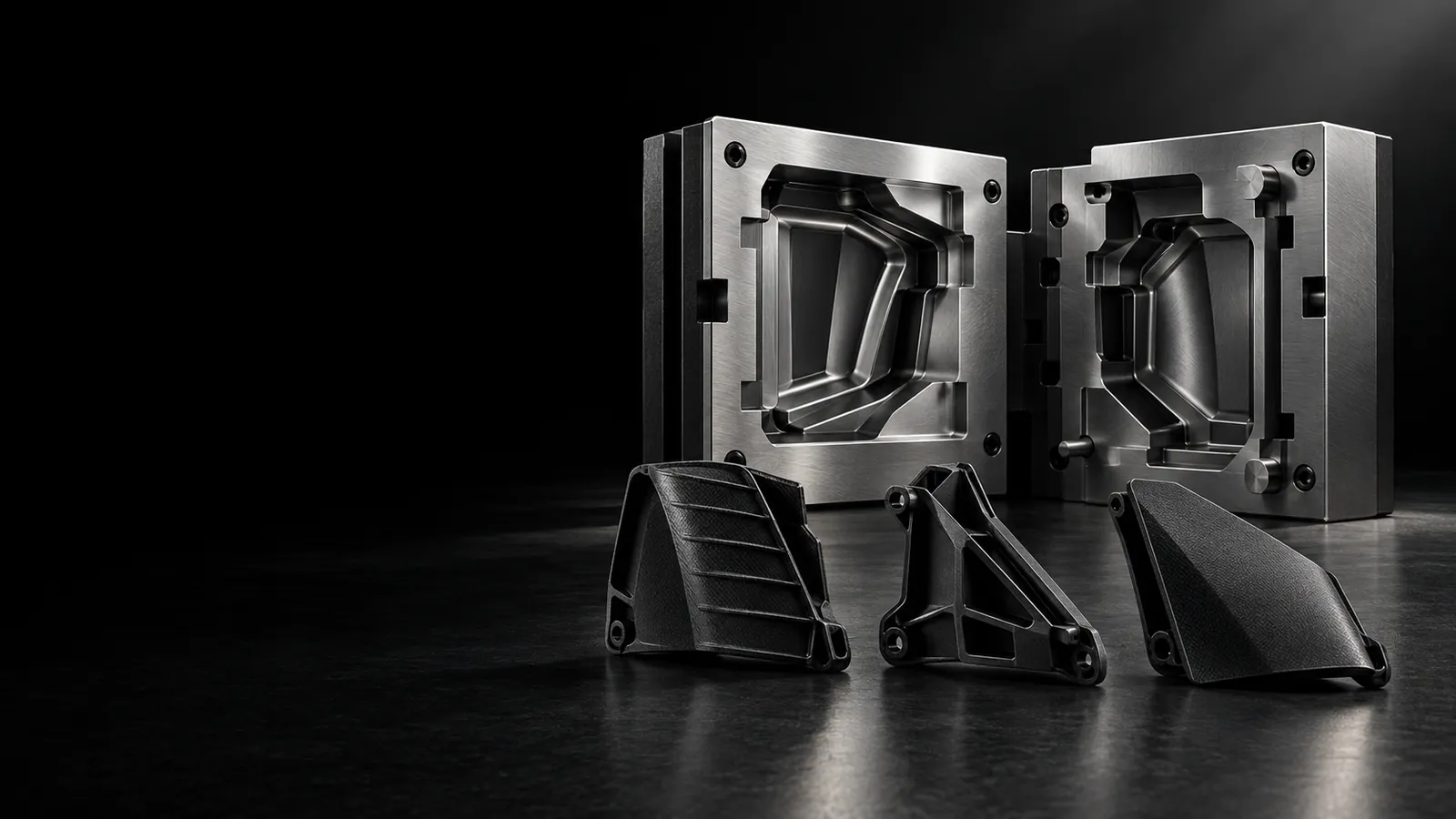
Theis Molding recreates tooling from authorized or customer-owned parts, drawings or CAD, then produces the part domestically. The path runs from capture to engineering, tooling and pilot parts, and on to repeat production.
Each replication program is built around the product rights, fit and function of the part, and the formulation is selected for the part’s mechanical role and environment.
Application focus
Explore the areas relevant to your project, then bring us the conditions the material needs to work within.
Unavailable components for agricultural, mining and industrial equipment, recreated from authorized parts, drawings or models, with tooling kept for repeat orders.
Covers, guards, grips, bumpers and wear inserts that operators can reorder with consistent geometry.
Matched cornices, trim, corbels and restoration details reproduced from an original.
Durable kitchen and household goods, detailed toys and furniture components produced domestically.
Composite tool bodies, mallets and insulating components.
Fitted shipping inserts, reusable trays, agricultural and grounds components, and civic or facility products.
A useful first conversation
01
A reference part, drawings or CAD, interfaces, dimensional limits and tolerances.
02
Confirmation that the design is customer-owned, authorized or licensed for replication.
03
Function, environment, expected volume and quality or acceptance criteria.
Theis Tekton can be a standalone coating, a complete material system, or anything in between. The configuration follows the application.
Before we begin
Yes. A reference part, drawing or CAD file can start the discussion, provided the design is customer-owned, authorized or licensed for replication.
The formulation is matched to the properties the component needs, from rigid structural forms to flexible, impact-absorbing parts.
Yes. Tooling is retained so operators can reorder a defined component with consistent geometry.